
 Pin It
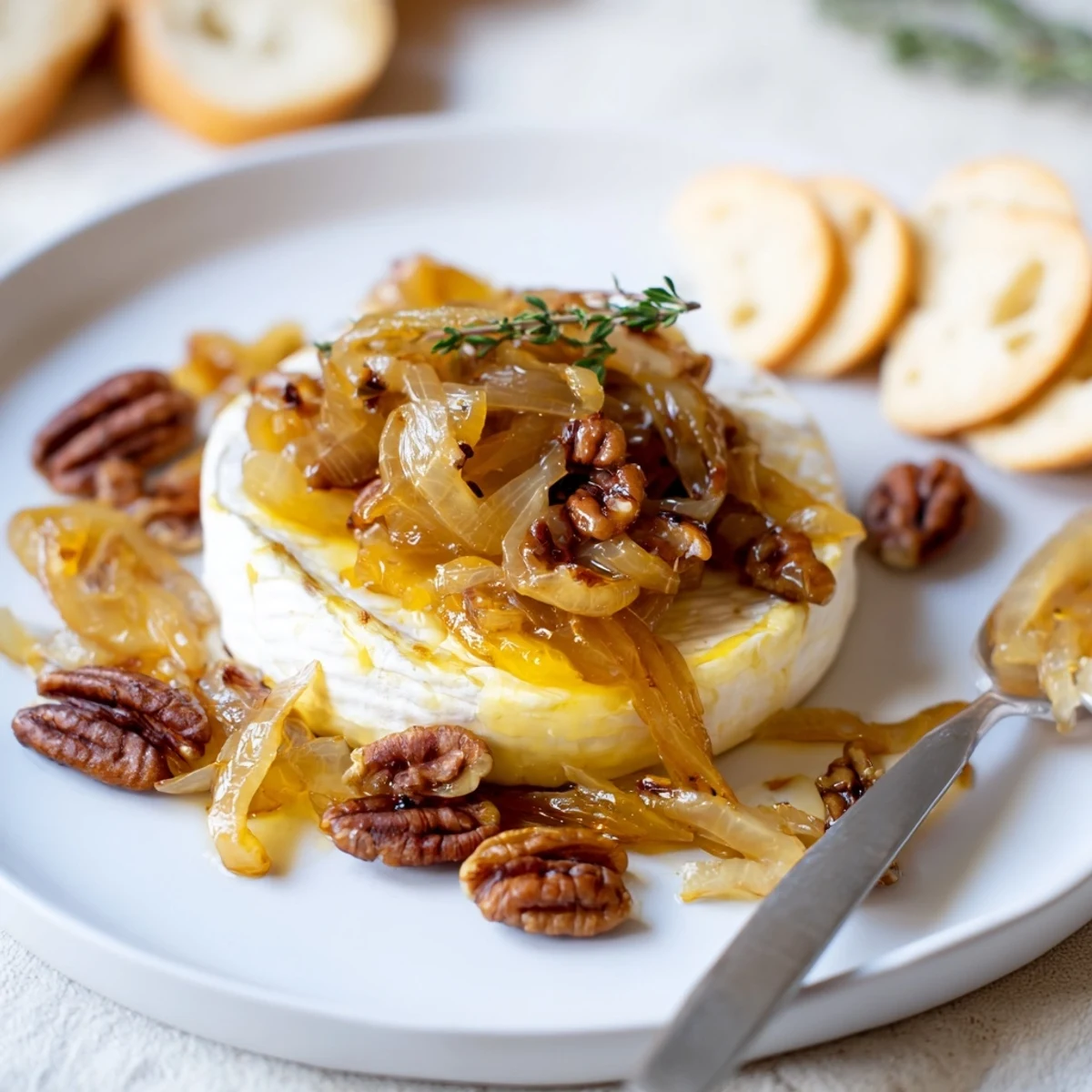
 Warm a wheel of brie until soft and melty, topping it with butter-slowed caramelized onions sweetened with brown sugar and a scattering of toasted pecans. Caramelize onions 18–22 minutes, toast pecans 3–4 minutes, then bake the assembled wheel 12–15 minutes at 350°F. Serve immediately with sliced baguette or crackers; finish with thyme or a honey drizzle for brightness.
My sister brought a wheel of brie to our holiday gathering one year and casually asked if I could do something with it beyond slicing it onto a plate. I rummaged through my pantry, found half a bag of pecans and some sad looking onions, and decided to wing it. The brie emerged from the oven bubbling and golden, and the room went quiet for a full minute while everyone hovered around the serving board with baguette slices in hand.
I have made this for book club nights, impromptu dinner parties, and once at eleven in the morning for a friend who showed up at my door having had a terrible week. There is something about warm cheese that communicates care without needing any words at all.
Ingredients
- Brie cheese (1 wheel, 8 oz): Use a whole wheel rather than a wedge because it holds its shape better during baking and looks beautiful on a platter.
- Yellow onions (2 medium): Thinly sliced is the way to go here because they break down into a sweet, glossy tangle that spreads easily over the cheese.
- Unsalted butter (2 tbsp): This gives the onions a rich base for caramelizing without making them overly salty.
- Pecan halves (1/2 cup): Toasting them raw in a dry skillet before sprinkling over the brie intensifies their flavor and adds a satisfying crunch.
- Brown sugar (1 tbsp): A small amount helps the onions develop that deep, golden caramel color a bit faster.
- Sea salt and black pepper: Seasoning the onions as they cook draws out moisture and builds flavor from the very beginning.
- Fresh thyme leaves (1 tbsp, optional): The herbal note cuts through the richness and makes the whole dish taste a little more sophisticated.
- Balsamic vinegar (1 tbsp, optional): A splash at the end of caramelizing adds a tangy depth that balances the sweetness beautifully.
- Baguette or crackers: You need something sturdy enough to scoop up soft cheese and slippery onions without falling apart mid bite.
Instructions
- Warm up the oven:
- Set your oven to 350 degrees Fahrenheit and line a baking sheet with parchment paper so the brie does not stick when it gets soft and gooey.
- Slow cook the onions:
- Melt the butter in a large skillet over medium heat, add the sliced onions with salt and pepper, and stir frequently until they turn soft and deeply golden, which takes about eighteen to twenty two minutes. Stir in the brown sugar and balsamic vinegar if using, then cook for two to three more minutes until everything looks glossy and jammy.
- Toast the pecans:
- While the onions do their thing, toss the pecans into a dry skillet over medium heat and stir them constantly for three to four minutes until you can smell their toasty aroma. Give them a rough chop once they cool slightly so every bite gets a bit of crunch.
- Prepare the brie:
- Remove the brie from its packaging and place it directly onto the parchment lined baking sheet or into a small ovenproof dish, keeping the rind on because it helps the cheese hold together.
- Assemble everything:
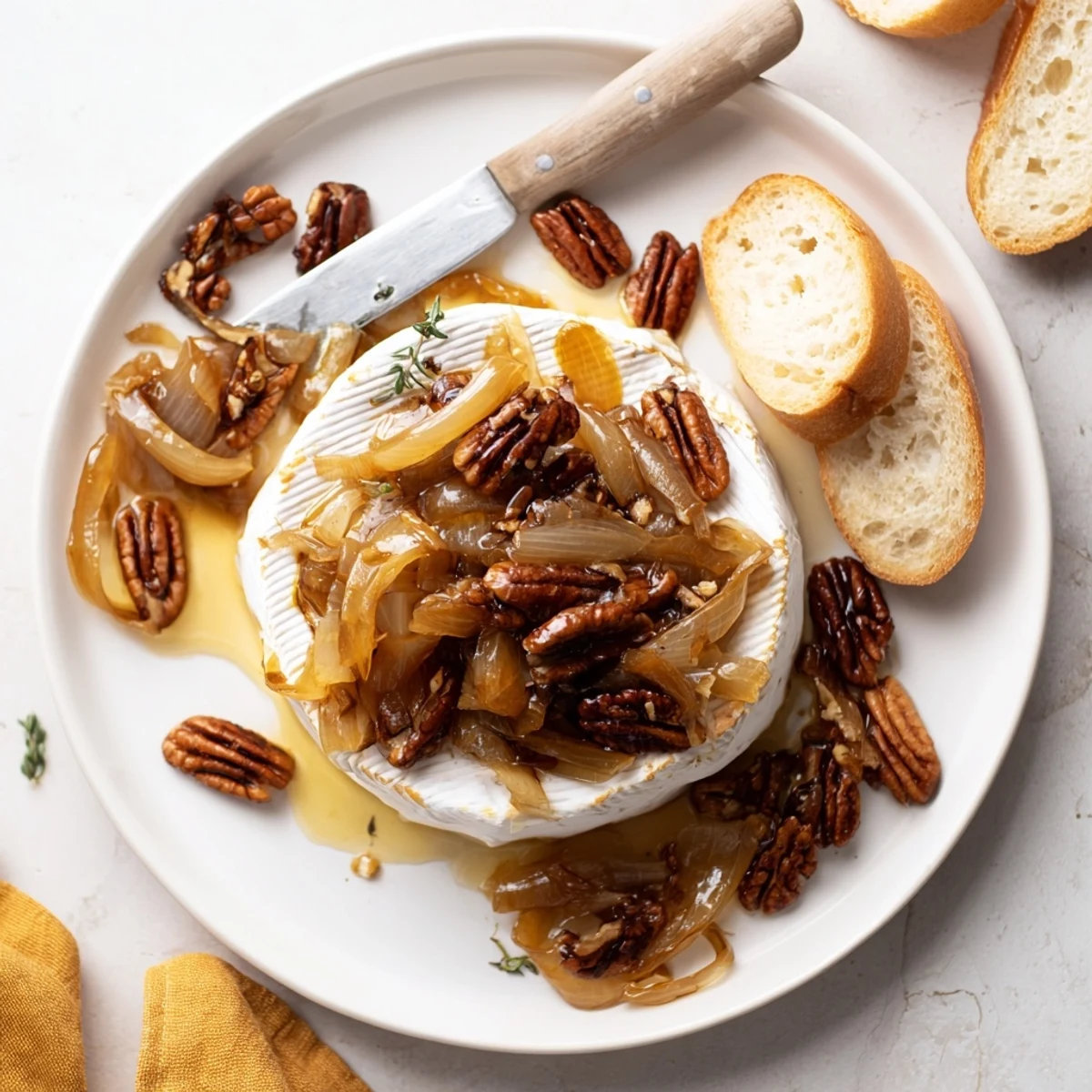
- Spoon the caramelized onions over the top of the brie wheel, then scatter the chopped pecans and thyme leaves evenly across the surface so each serving gets all three elements.
- Bake until melty:
- Slide the brie into the oven for twelve to fifteen minutes, watching for the edges to soften and the cheese to gently bulge without bursting through the rind.
- Serve immediately:
- Transfer the baked brie carefully to a serving platter and surround it with sliced baguette or crackers because the cheese starts to firm up the longer it sits at room temperature.
 Pin It
 The first time I served this, my usually reserved father in law went back for a fourth helping and pretended he was just getting more crackers. Moments like that are the real reason this recipe lives in my permanent rotation.
Picking the Right Brie
Not all brie is created equal and the cheese you choose makes a noticeable difference. A double cream brie melts beautifully into a silky pool, while a triple cream version becomes almost liquid and is best served in a dish rather than on a flat surface. Avoid brie that feels rock hard or has no scent because it will not soften properly and the flavor will be bland. If you can find a wheel with a slightly bloomy, plush rind and a gentle mushroomy aroma, that is the one to grab.
Making It Your Own
This recipe is a blueprint that welcomes almost any variation you can dream up. A drizzle of honey over the finished brie adds a floral sweetness that pairs especially well with the pecans. You could swap walnuts for pecans, or use rosemary instead of thyme for a more piney, wintery fragrance. Slices of apple or pear arranged around the platter give guests a fresher, lighter option alongside the bread and crackers, and a glass of chilled rosé or sparkling cider alongside turns a simple appetizer into a proper occasion.
Getting Ahead and Storing Leftovers
You can caramelize the onions a day or two in advance and store them in the refrigerator in a sealed container, which makes the actual assembly delightfully quick when guests arrive. Leftovers can be gently reheated in a low oven for about five minutes, though they never last long enough in my house to test that theory more than once. The baked brie is best enjoyed fresh but will keep in the refrigerator for up to two days.
- Toast the pecans ahead of time and store them in an airtight container at room temperature.
- If you are transporting this to a gathering, bake the brie on site rather than beforehand for the best texture.
- Always let the brie rest for two minutes after baking so you do not burn your mouth on molten cheese.
 Pin It
 Some dishes are simply cheese on bread, and then some dishes are the reason people linger in the kitchen long after the party has moved elsewhere. This is the second kind.
Recipe FAQs
- → How do I caramelize the onions without burning them?
-
Use medium heat and a wide skillet so the onions cook evenly. Stir frequently and allow 18–22 minutes for them to soften and take on color. Add a pinch of salt to help draw out moisture, and finish with brown sugar and a splash of balsamic if desired to boost sweetness and depth.
- → Can I swap the pecans for another nut or omit them?
-
Yes. Walnuts or toasted almonds provide similar texture and flavor. If avoiding nuts, increase the onion topping or add toasted seeds for crunch. Toast any substitute in a dry pan 2–4 minutes until fragrant before chopping and sprinkling on top.
- → What’s the best way to keep the brie from bursting while baking?
-
Leave the rind intact and bake at a moderate temperature (350°F) just until the center is soft, about 12–15 minutes. Avoid high heat and check early; the wheel should be melty but not split open. Placing brie in a small ovenproof dish helps contain any softening cheese.
- → Can this be prepared ahead of time?
-
You can caramelize the onions and toast the pecans a day ahead; store them separately in the fridge. Assemble and bake the brie just before serving for best texture. Reheat gently at 325°F for 8–10 minutes if necessary, or microwave in short bursts until warm.
- → What should I serve alongside the brie?
-
Sliced baguette, crackers, apple or pear slices, and fresh herbs like thyme pair beautifully. For drinks, try a chilled rosé, sparkling wine, or dry cider to balance the cheese’s richness and the onions’ sweetness.
- → Are there any allergen or dietary considerations?
-
This dish contains dairy and tree nuts; use nut-free toppings for nut allergies and confirm bread options for gluten restrictions. For a dairy-free alternative, consider a plant-based soft cheese and use the same caramelized onion topping.