
 Pin It
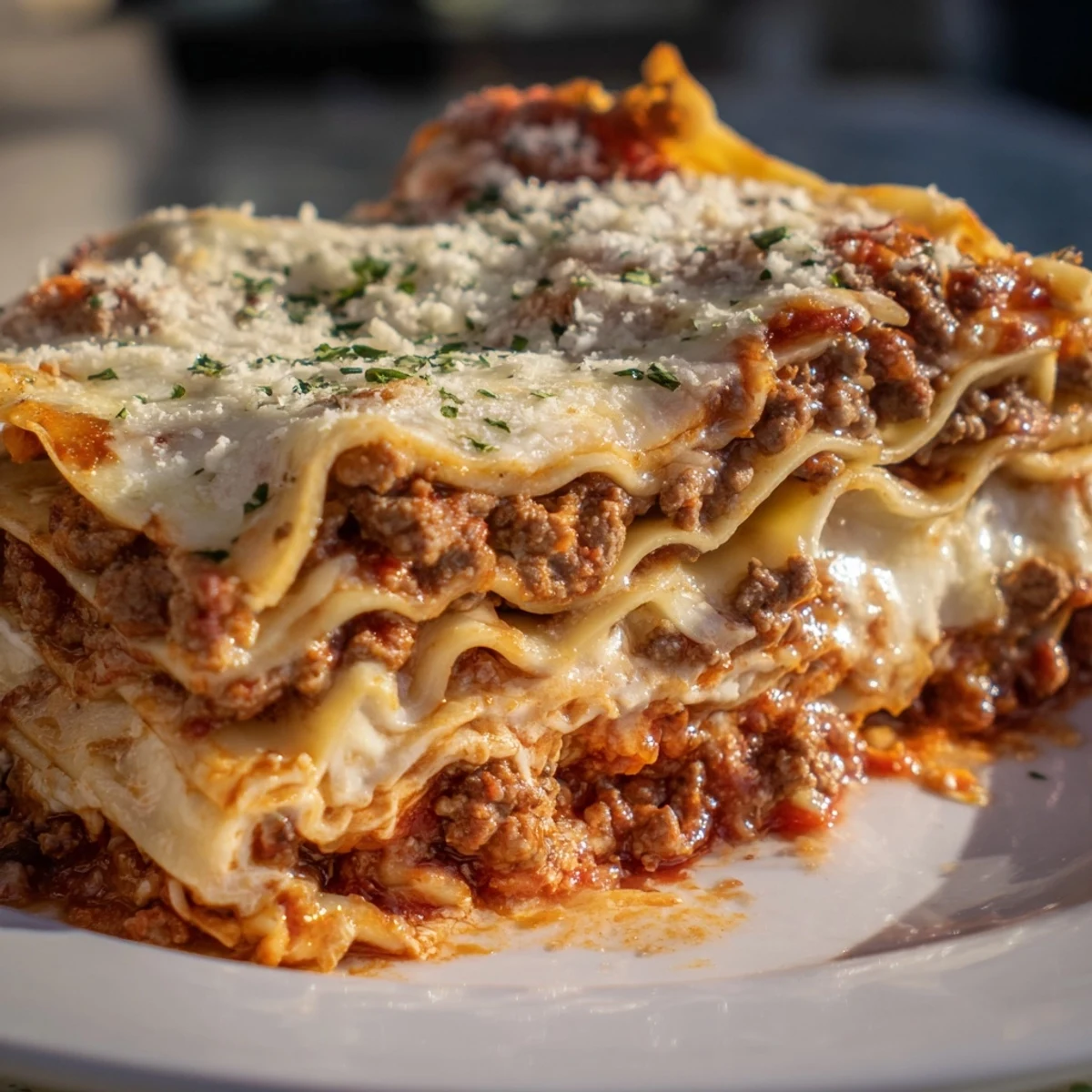
 This Italian comfort dish features layers of savory beef sauce simmered with tomatoes and herbs, creamy ricotta mixed with Parmesan and parsley, and tender noodles baked with melted mozzarella cheese. The hearty flavors combine perfectly with a golden bubbly top, offering a satisfying and crowd-pleasing meal. Let it rest before slicing to enhance the flavors and texture, making it perfect for gatherings or family dinners.
There was a Tuesday evening when my neighbor knocked on the kitchen window with that particular look people get when they smell something good cooking. I was three layers deep into my lasagna, the kind that takes patience but rewards you with something so satisfying that one serving somehow becomes two. That moment crystallized why this recipe matters to me—it's the kind of dish that fills your home with warmth before anyone even takes a bite.
I made this for my mom's birthday dinner once, and she walked into the kitchen mid-assembly and just stood there watching me layer the ricotta. She didn't say anything, just smiled at how the noodles draped and how the sauce pooled in the corners. Food memories aren't always about taste—sometimes they're about those small moments of seeing someone you love recognize exactly why you're doing something.
Ingredients
- Olive oil: Use something you actually like the taste of, not the cheapest bottle—it's going into your sauce where it matters.
- Ground beef: I learned the hard way that 80/20 lean is the sweet spot; too lean and the sauce tastes thin, too fatty and you're skimming grease all afternoon.
- Onion and garlic: These two are the foundation, so don't rush them—let the onion actually soften and turn slightly golden.
- Tomato paste and crushed tomatoes: The paste concentrates the flavor, then the whole tomatoes give you texture and brightness.
- Dried oregano and basil: Fresh is lovely, but dried works just as well here and actually develops a deeper flavor as it simmers.
- Ricotta cheese: Whole milk makes a difference in richness, and it should be creamy enough to spread easily.
- Egg: This binds everything together and keeps the ricotta from being watery once baked.
- Mozzarella cheese: Buy the block and shred it yourself if you have time—it melts smoother than pre-shredded.
- Lasagna noodles: No-boil saves time, but regular noodles give you more control and a better texture in my experience.
Instructions
- Heat your oil and soften the aromatics:
- Medium heat, patience here—you want that onion to turn translucent and slightly sweet, about 3 to 4 minutes. The kitchen will start smelling like something important is happening.
- Cook in the garlic:
- Just one minute, until it wakes up and releases that sharp, peppery smell. Too long and it tastes bitter, so timing matters.
- Brown the beef:
- Crumble it as it hits the pan, breaking it into small pieces as it cooks. You're looking for no pink remaining and the meat to smell rich and savory, which takes about 5 to 7 minutes depending on your heat.
- Season and add paste:
- Sprinkle in your salt, pepper, oregano, basil, and red pepper flakes if you like heat. Stir in the tomato paste and let it cook for about a minute so it caramelizes slightly and loses that raw edge.
- Add your tomatoes and simmer:
- Pour in the crushed tomatoes, tomato sauce, and sugar (the sugar balances acidity without you tasting it). Simmer uncovered for 20 to 25 minutes, stirring now and then, until the sauce thickens and smells like it's been cooking for hours.
- Mix the ricotta filling:
- While the sauce simmers, combine ricotta, egg, Parmesan, parsley, salt, and pepper in a bowl. Stir until completely smooth with no lumps—this mixture should spread easily.
- Cook your noodles:
- If using regular noodles, follow the package directions and drain them well. They should be tender but still have a slight resistance when you bite one.
- Build your lasagna:
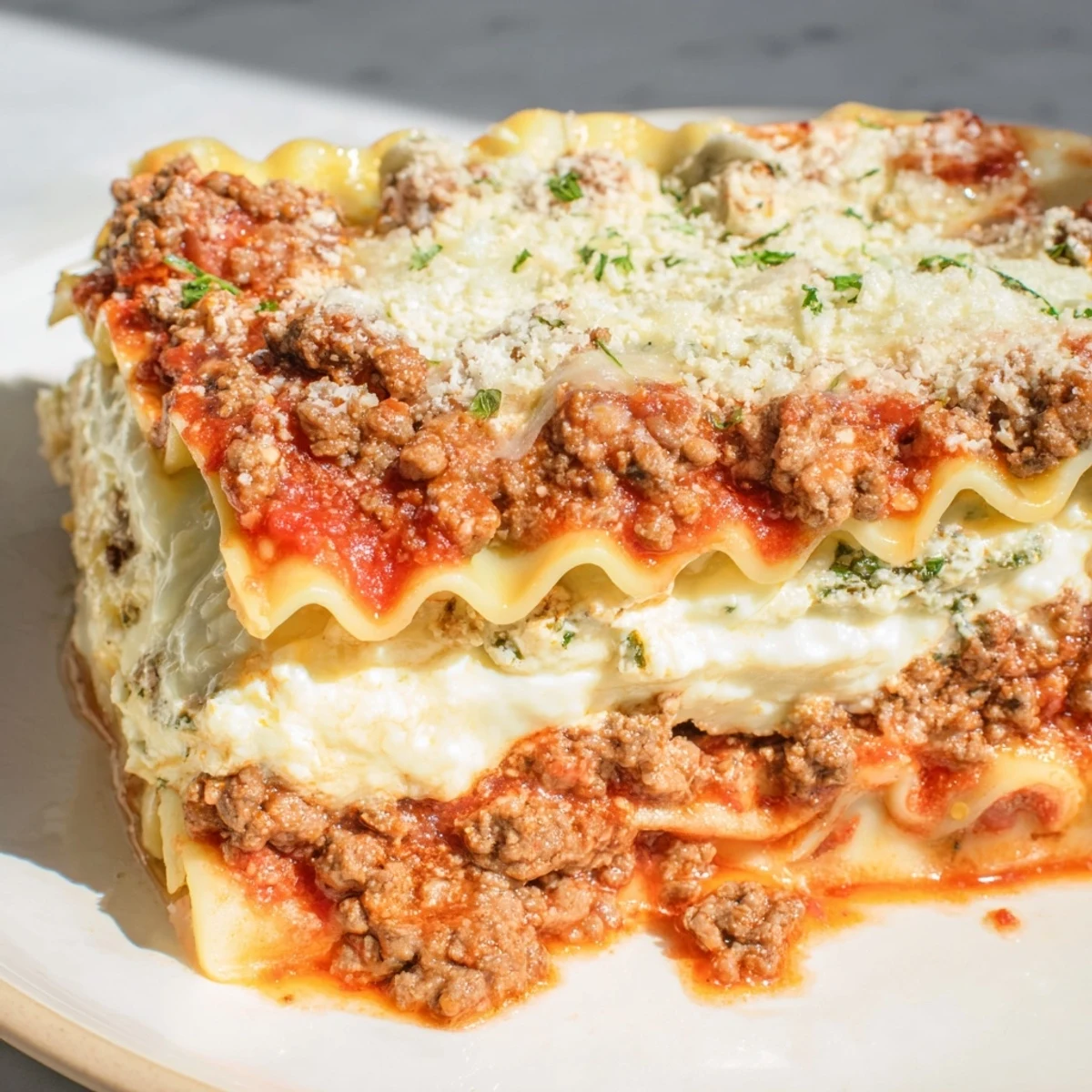
- Spread a thin layer of meat sauce on the bottom of your baking dish so the noodles don't stick. Layer 4 noodles, then one-third of the ricotta mixture spread gently, then a sprinkle of mozzarella, then about 1 and a half cups of sauce. Repeat twice, ending with noodles and your remaining sauce.
- Top with cheese:
- Cover everything with the remaining mozzarella and Parmesan. This is where the golden bubbly magic happens.
- Bake covered then uncovered:
- Spray foil with oil on the underside so cheese doesn't stick to it, cover the dish, and bake at 375°F for 25 minutes. Remove foil and bake another 20 to 25 minutes until the cheese is golden and you can see bubbles at the edges.
- Let it rest:
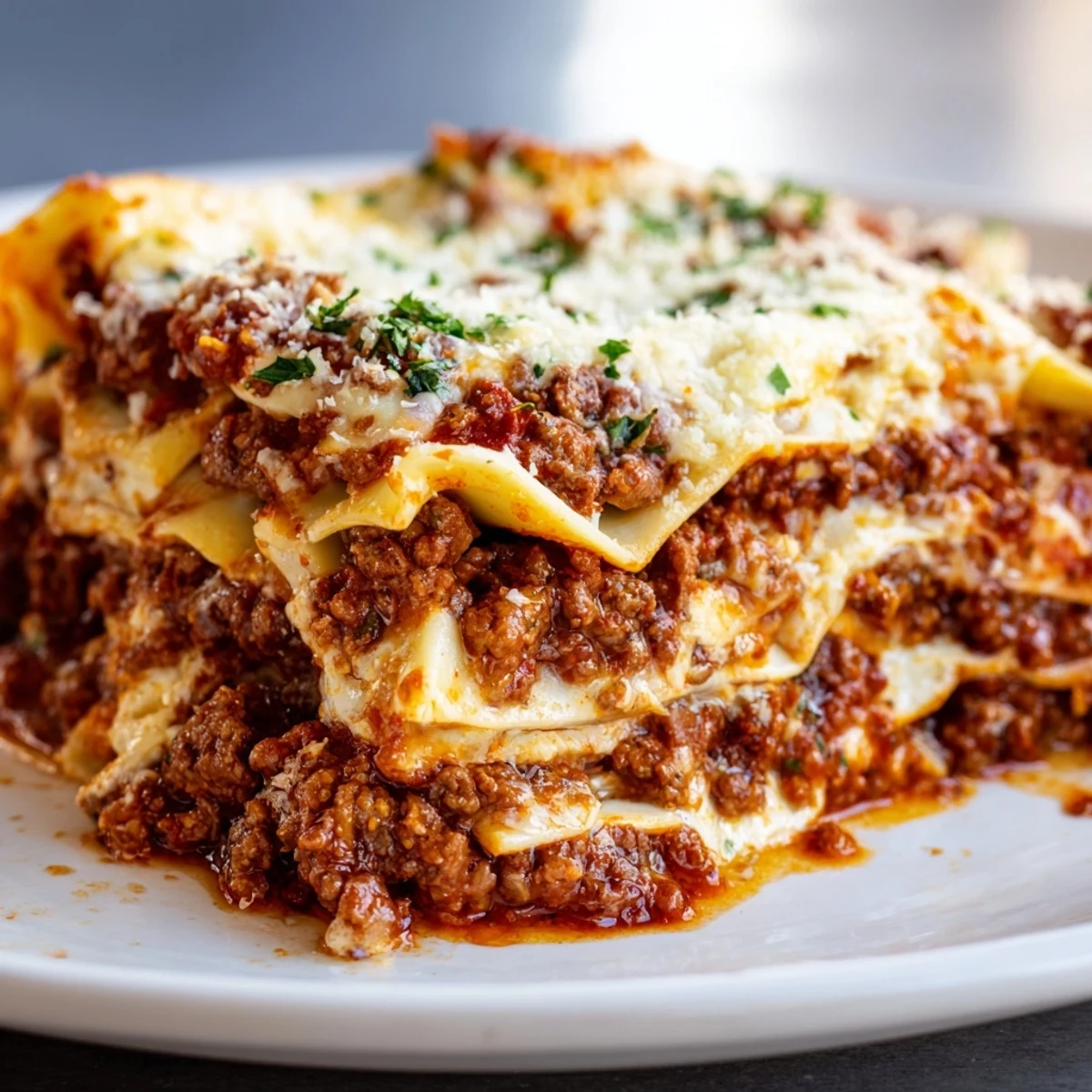
- This is not optional—15 minutes lets everything set so you can actually cut clean slices instead of scooping lasagna soup.
 Pin It
 There's something almost meditative about building lasagna, the repetition of spreading and layering, knowing exactly where each component goes. It's comfort food that asks you to slow down and be intentional, which might be why people remember it.
The Sauce Is Everything
The meat sauce is where this dish lives or dies, and it deserves your attention. The simmering time isn't just about thickening—it's about the flavors marrying together, the harsh edge of the tomato smoothing out, the spices becoming less individual and more woven into something deeper. I used to rush this part until I realized that 20 minutes versus 10 minutes tastes completely different. The sugar isn't sweetness; it's a whisper that balances the acid in the tomatoes so nothing tastes sharp or one-dimensional.
Variations That Work
This recipe is flexible in the best way. My brother adds Italian sausage to his version for richness, my sister layers spinach between the cheese and sauce, and my dad once threw in roasted vegetables because that's what was in his fridge. None of these are wrong—they're just different conversations with the same basic template. The structure holds.
Building and Baking Wisdom
The foil covering the first part of baking prevents the cheese from browning too fast while everything heats through. It's a small technique that keeps you from ending up with burnt edges and cold filling. The moment you remove that foil and see the cheese start to bubble is when you know it's almost ready.
- Spray the underside of your foil with oil so the melted cheese doesn't cement itself to the aluminum.
- If your oven runs hot, check at 20 minutes instead of waiting the full 25; ovens vary wildly.
- Leftover lasagna actually tastes better the next day once the flavors have had time to settle.
 Pin It
 This lasagna is the kind of recipe that becomes yours once you make it a few times. I hope your kitchen smells like mine did that Tuesday evening, and that someone special gets to sit down to a table where this is waiting.
Recipe FAQs
- → What type of noodles should I use?
-
Regular or no-boil lasagna noodles work well. Regular noodles need to be cooked before assembly, while no-boil noodles can be layered directly.
- → How do I make the meat sauce flavorful?
-
Sauté onion and garlic in olive oil, then brown the beef with herbs like oregano and basil. Simmer with crushed tomatoes, tomato sauce, and a touch of sugar for balance.
- → Can I substitute the ricotta cheese?
-
Cottage cheese is a common alternative that provides a lighter texture, though the flavor and creaminess differ slightly.
- → What should I do to prevent the lasagna from drying out?
-
Cover the lasagna with foil during the first part of baking to retain moisture, removing it near the end to brown the cheese.
- → Are there optional ingredients to enhance the dish?
-
Adding Italian sausage to the meat sauce or layering sautéed spinach or roasted vegetables can provide extra flavor and variety.