
 Pin It
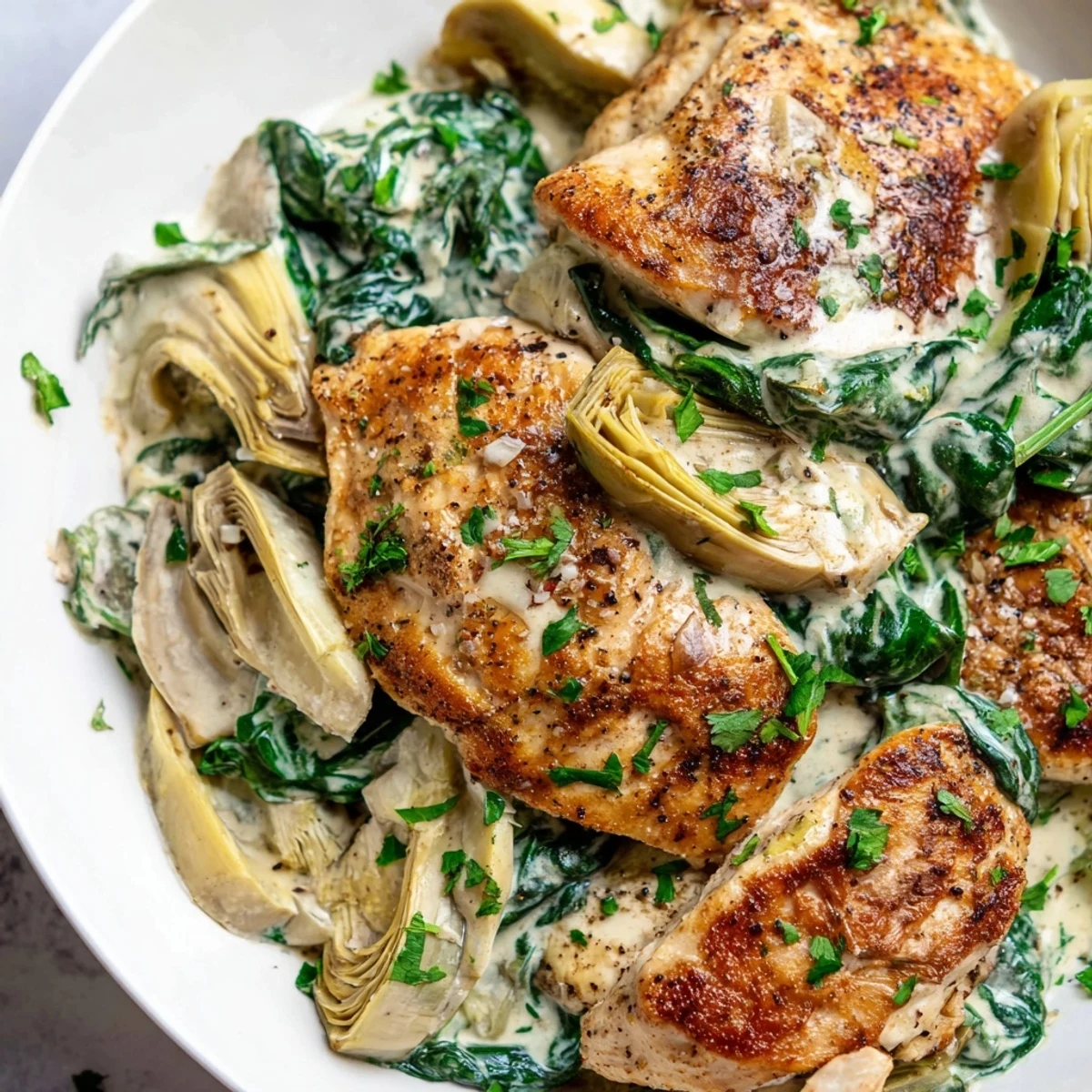
 This one-pan dish combines juicy chicken breasts with a rich and creamy sauce infused with fresh spinach and artichoke hearts. Sautéed garlic and a blend of Parmesan and Italian herbs deepen the flavors. The sauce is gently simmered until slightly thickened, creating a luscious coating for the chicken. Perfect for an easy, gluten-free meal that brings comforting flavors to your table in under 40 minutes. Serve with your choice of sides to complete the experience.
My sister called on a Tuesday asking what to make for dinner, and I found myself describing this creamy skillet dish without hesitation, as if it had become part of my kitchen vocabulary. She made it that night and texted me a photo of the pan—all golden chicken nestled in sauce the color of silk—with just one word: "wow." That's when I realized this wasn't just another weeknight recipe; it was the kind of meal that quietly becomes a favorite because it feels both restaurant-quality and somehow easy enough for a regular evening. Now when someone asks me what I make when I want to feel like I've accomplished something in the kitchen, this is it.
I made this for my neighbor who'd just moved in, and she arrived at my door with a bottle of wine looking a little overwhelmed by the move. Thirty minutes later she was sitting at my kitchen counter with a full plate, and we talked until the food was gone—she went home that night feeling less alone in a new place. That's the kind of dish this is: it doesn't demand your full attention, so you can actually be present with the people you're cooking for.
Ingredients
- Boneless, skinless chicken breasts: Pat them dry before seasoning so they'll brown properly and stay juicy inside; moisture is the enemy of a golden crust.
- Fresh spinach: Roughly chop it now because it'll shrink down dramatically once it hits the heat, and you want pieces big enough to see in the final dish.
- Canned artichoke hearts: Drain them well and quarter them so they cook evenly and distribute throughout the sauce instead of clumping together.
- Heavy cream: This is the backbone of your sauce; don't skip it or substitute it with anything else if you want that luxurious texture.
- Parmesan cheese: Grate it fresh if you can because the pre-shredded stuff has anti-caking agents that can make your sauce grainy.
- Dijon mustard: Just a teaspoon, but it adds a subtle tang that keeps the dish from feeling one-note and heavy.
- Garlic: Mince it fine and don't let it brown or it'll turn bitter and ruin the whole sauce.
Instructions
- Prep and season your chicken:
- Pat the chicken breasts dry with paper towels—this step matters because any moisture keeps them from browning properly. Season both sides generously with salt and pepper, feeling the texture change slightly as the salt begins to break down the surface.
- Sear the chicken until golden:
- Heat olive oil in your skillet over medium-high heat until it shimmers, then lay the chicken breasts down and listen for that immediate sizzle. Let them sit untouched for 4-5 minutes so they develop a proper golden crust, then flip and repeat.
- Build your sauce base:
- Once the chicken is removed, melt butter in the same skillet and add minced garlic, stirring constantly for about a minute until the smell fills your kitchen. This is where the magic starts—you're building layers of flavor on the browned bits left behind from the chicken.
- Create the creamy sauce:
- Pour in your cream, broth, and cheese, stirring gently until the cheese melts into the sauce and everything turns smooth and cohesive. Add the mustard and Italian herbs, then let it bubble gently for a few minutes so the flavors marry together.
- Wilt in the vegetables:
- Stir in the spinach and artichoke hearts, watching as the greens collapse from bright to muted, and the artichokes absorb the sauce flavors. This takes just 2-3 minutes, and you'll know you're done when the spinach is tender and no raw-looking bits remain.
- Return the chicken and finish cooking:
- Nestle the seared chicken breasts back into the sauce, spoon some sauce over the top of each one, then cover and reduce heat to low. Let it simmer gently for 8-10 minutes until a meat thermometer inserted into the thickest part reads 165°F—the gentle heat keeps the chicken tender instead of tough.
- Finish and serve:
- Scatter fresh parsley over the top if you have it, then serve right from the skillet at the table so everyone can see what they're eating. The steam rising off it is part of the experience.
 Pin It
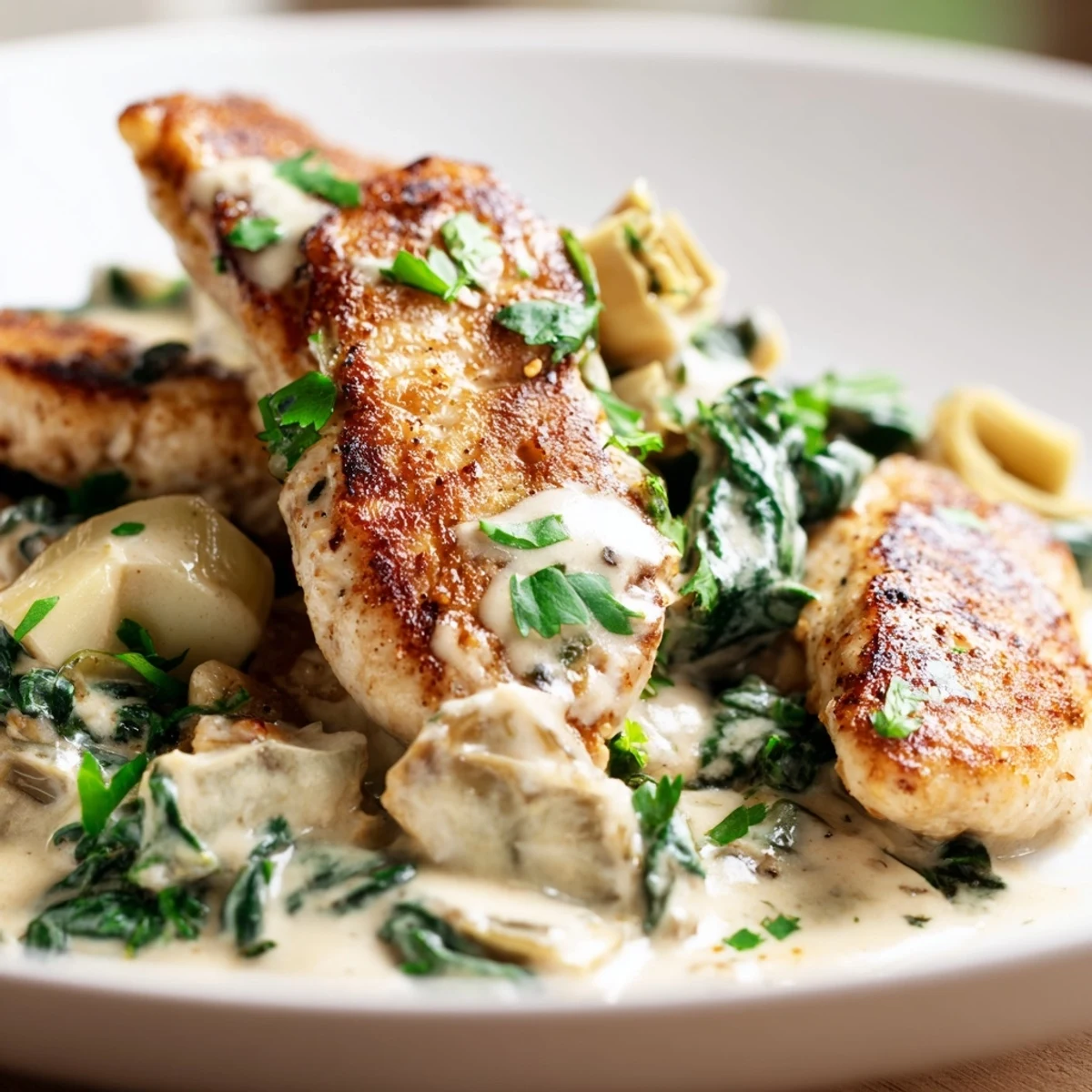
 I've served this dish to people who claimed they don't like creamy sauces, and they always go back for seconds, often mentioning how the sauce somehow doesn't feel heavy. That's because the spinach and artichokes cut through the richness and the mustard keeps everything from tasting monotone, and somehow that simple balance is what turns a weeknight dinner into something people remember.
Flexibility With Substitutions
This dish is forgiving in a way that appeals to how real kitchens actually work. Don't have fresh spinach? Frozen works beautifully if you thaw and squeeze it dry first. Out of heavy cream but you have half-and-half? The sauce will be lighter and less rich, which some people actually prefer. Tired of artichoke hearts? Sun-dried tomatoes, roasted red peppers, or even mushrooms will give you that textural interest without changing the fundamental character of the dish. The mustard and Italian herbs are the throughline that keeps everything tasting cohesive no matter what you swap in.
Serving Ideas That Work
I've served this over everything from buttered egg noodles to mashed potatoes to cauliflower rice, and it works every time because the sauce is the star. Some nights when I'm trying to be lighter, I serve it with just a simple green salad on the side, which cools down the richness on your palate. Other nights when I'm cooking for people who want comfort, crusty bread becomes essential for soaking up every last bit of sauce—and honestly, that's when this dish shines brightest.
Timing and Make-Ahead Options
The entire recipe happens in the time it takes to pour a glass of wine and catch up with someone, which is why it's become my go-to for weeknights when I want something that tastes impressive but doesn't require hours of planning. You can prep the ingredients earlier in the day—chop the spinach and garlic, measure out the cream and broth—but I'd avoid cooking ahead of time because the spinach gets a little tired looking when reheated. The beauty of this dish is that it genuinely doesn't ask much of you in the moment; it just asks that you're present for the twenty-five minutes it takes.
- Chop vegetables and measure your cream mixture earlier in the day if you want to simplify the evening rush.
- Make sure your chicken is at room temperature before searing, not straight from the fridge, so it cooks evenly.
- Have everything within arm's reach of your skillet before you start cooking because the pace moves faster than you might expect.
 Pin It
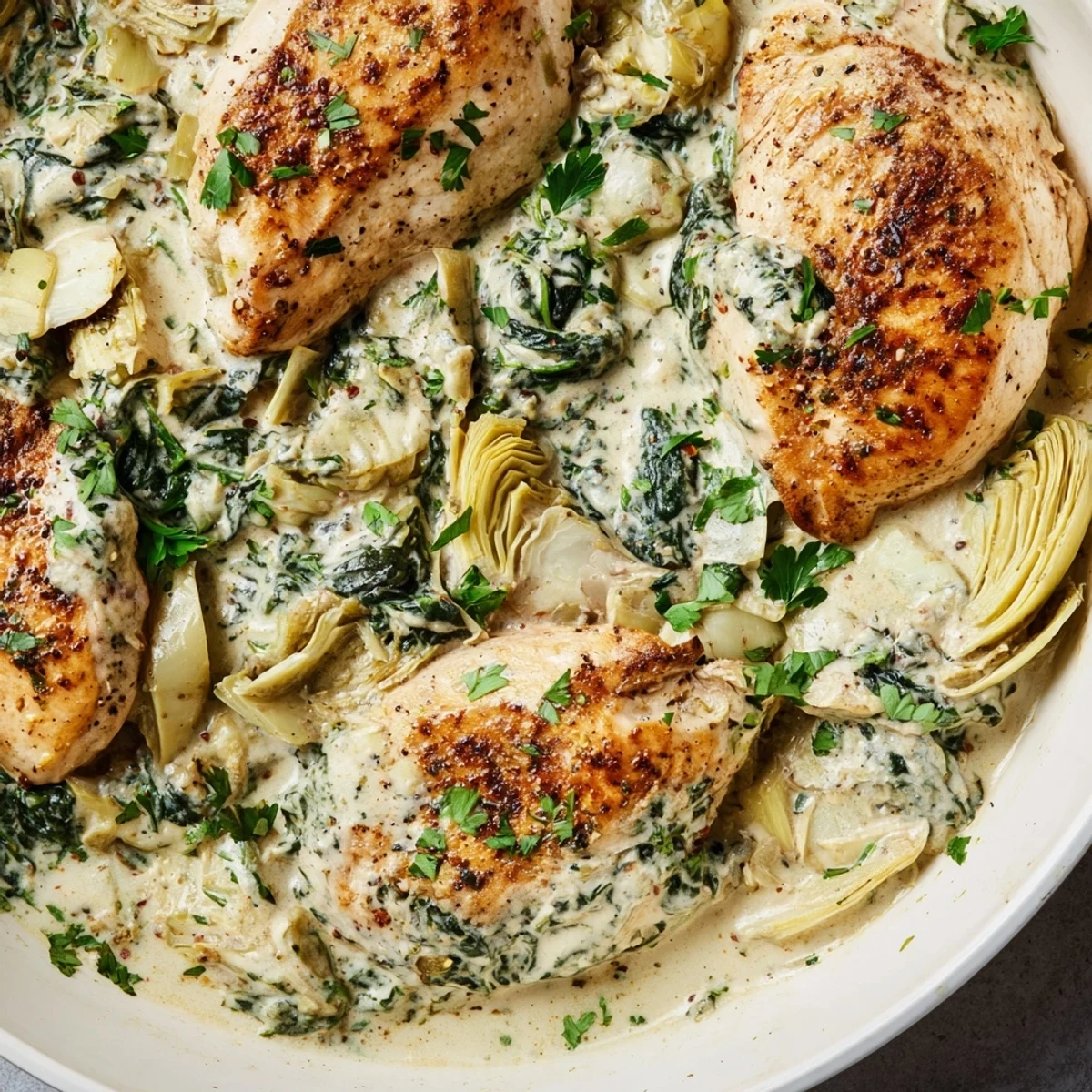
 This is the kind of dish that people come home to, not the kind they go out to find—and that's exactly as it should be. It reminds you that the best meals are often the simplest ones, made with attention and served with openness.
Recipe FAQs
- → What is the best way to cook the chicken for this dish?
-
Sear the seasoned chicken breasts in olive oil over medium-high heat until golden brown on both sides, then simmer in the sauce to ensure tenderness and full flavor.
- → Can I use frozen spinach instead of fresh?
-
Yes, frozen spinach can be substituted. Be sure to thaw and squeeze out excess water to avoid thinning the sauce.
- → How do the artichoke hearts affect the flavor?
-
Artichoke hearts add a subtle tangy and earthy taste that balances the richness of the creamy sauce.
- → What sides pair well with this creamy skillet dish?
-
Steamed rice, mashed potatoes, or crusty bread complement the creamy sauce and tender chicken nicely.
- → Is it possible to lighten the sauce without losing flavor?
-
Substituting half-and-half for heavy cream reduces richness while maintaining a creamy texture and balanced flavor.