
 Pin It
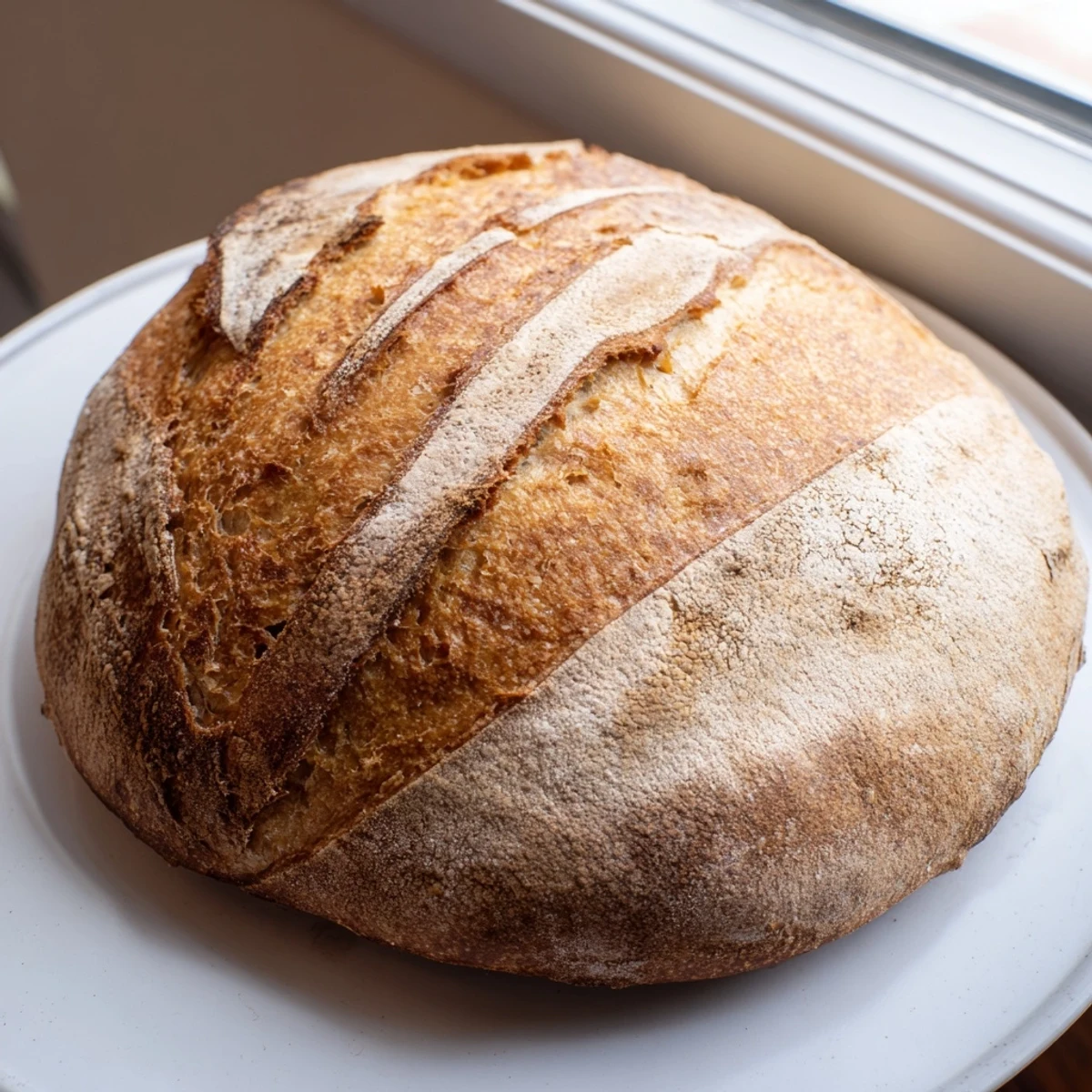
 This beginner-friendly European-style bread delivers professional bakery results with minimal effort. The dough requires just four pantry staples—bread flour, salt, yeast, and water—making it accessible for home bakers of any skill level.
The magic happens during a simple rise and high-temperature bake in a Dutch oven, creating that coveted crackling crust and tender, airy interior. In just over two hours, you'll have a golden loaf perfect for dipping in olive oil, slathering with butter, or serving alongside hearty soups.
Customize with rosemary, thyme, or olive oil for added depth. The result is a rustic, handcrafted bread that rivals any artisan bakery.
The smell of fresh bread has stopped me in my tracks more times than I can count, but I always assumed making it required some kind of culinary magic I did not possess. Then one rainy Sunday, I decided to just mix flour and water and see what happened. That first loaf came out dense and slightly burnt, but the taste was absolutely transformative. I have been tweaking this recipe ever since, and it is become the one bread that actually works every single time.
My sister came over last month and walked right past me toward the kitchen, asking what bakery I had visited. Her face when I told her I had baked it that morning was absolutely priceless. We sat at the counter tearing off warm pieces with our hands, not even bothering with plates, and talked until the sun went down.
Ingredients
- Bread flour: The higher protein content creates that beautiful chewy texture we all love in artisan bread
- Instant yeast: No proofing needed, just mix it right in with the flour
- Lukewarm water: Think bathwater temperature, about 105 degrees if you are using a thermometer
- Cornmeal or semolina: This little dusting keeps the bread from sticking and adds a subtle crunch to the bottom crust
Instructions
- Mix your dough:
- Combine flour, salt, and yeast in a large bowl, then pour in the water and stir until everything comes together into a shaggy, sticky mass
- Let it rise:
- Cover the bowl and walk away for 1 to 2 hours, letting time do all the hard work for you
- Shape the loaf:
- Turn the dough onto a floured surface, fold the edges underneath to create tension, and place it on parchment paper
- Preheat everything:
- Get your oven to 450 degrees and heat your Dutch oven inside it so the bread gets an immediate burst of heat
- Bake with steam:
- Transfer the dough into the hot pot, score the top with a knife, and bake covered for 25 minutes before uncovering for the final 15
 Pin It
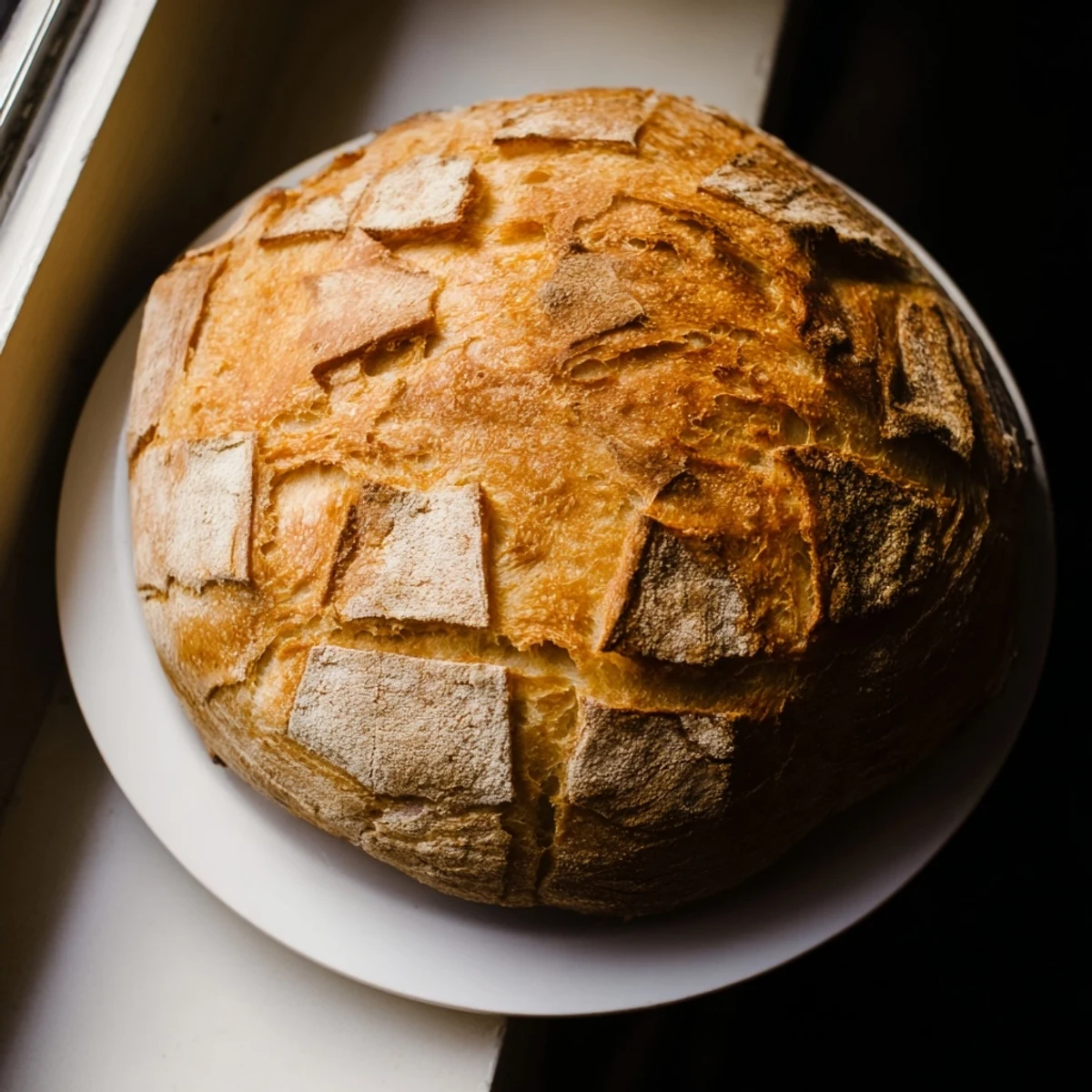
 There is something deeply satisfying about pulling a golden loaf from the oven and hearing that hollow tap against the bottom. My neighbor actually knocked on my door once to ask what I was making because the aroma had drifted through the hallway. We ended up sharing slices with butter right there on my porch steps.
Getting That Perfect Crust
The Dutch oven method creates steam that keeps the crust soft initially, allowing the bread to expand fully before hardening into that irresistible crunchy exterior. If you do not have one, a baking sheet works, but you will miss some of that professional oven spring.
Timing Your Bake
I have learned that the bread is truly done when it sounds hollow when tapped on the bottom, not just when the timer goes off. Under baked bread might look right, but the texture will be dense and disappointing.
Making It Your Own
Once you have mastered the basic version, try adding herbs, roasted garlic, or even olives to the dough. The base recipe is forgiving and welcomes experimentation.
- Let the bread cool completely before slicing or the steam will escape
- Store in a paper bag, not plastic, to keep the crust crisp
- Day old bread makes incredible croutons or breadcrumbs
 Pin It
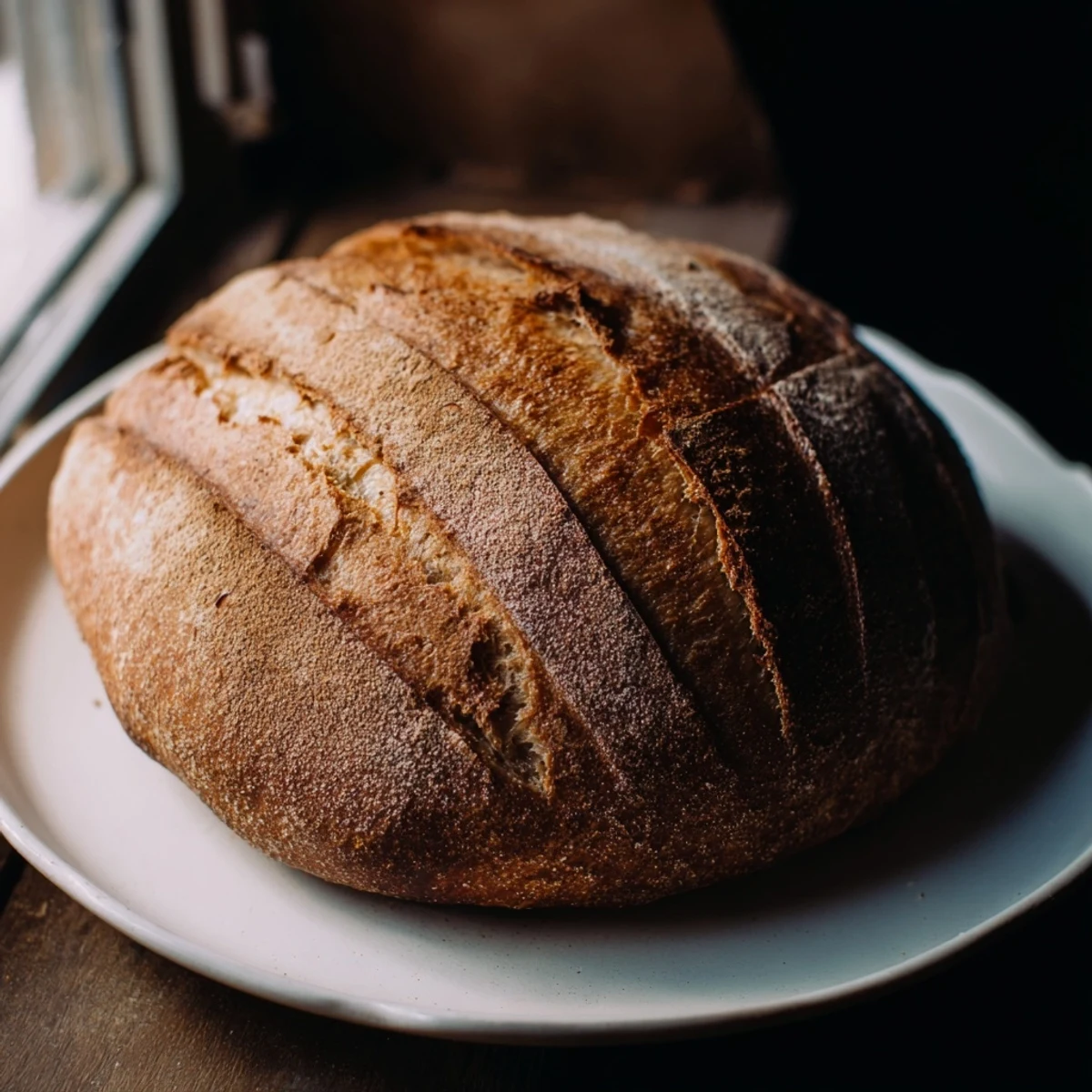
 There is nothing quite like warm homemade bread with salted butter, still slightly steaming from the oven. Every time I make this, I am reminded that the best things in life really are the simplest.
Recipe FAQs
- → What makes this bread crusty?
-
Baking in a preheated Dutch oven creates steam, which develops a thick, crackling crust. The high initial temperature and enclosed environment mimic professional steam-injected ovens.
- → Can I make this without a Dutch oven?
-
Yes. Use a heavy baking sheet or pizza stone preheated at 450°F. Place a metal pan with water on the bottom rack to create steam for better crust formation.
- → How do I know when the loaf is done?
-
The crust should be deep golden brown. Tap the bottom—it should sound hollow. An instant thermometer inserted into the center should read 190-200°F.
- → Why is my dough too sticky?
-
This dough naturally feels shaggy and tacky. Avoid adding too much extra flour, which makes the loaf dense. Lightly flour your hands and work surface when shaping.
- → Can I add herbs or other flavors?
-
Absolutely. Mix in 1-2 tablespoons fresh rosemary, thyme, or dried Italian herbs during step 2. You can also add 1 tablespoon olive oil for subtle richness and softer texture.