
 Pin It
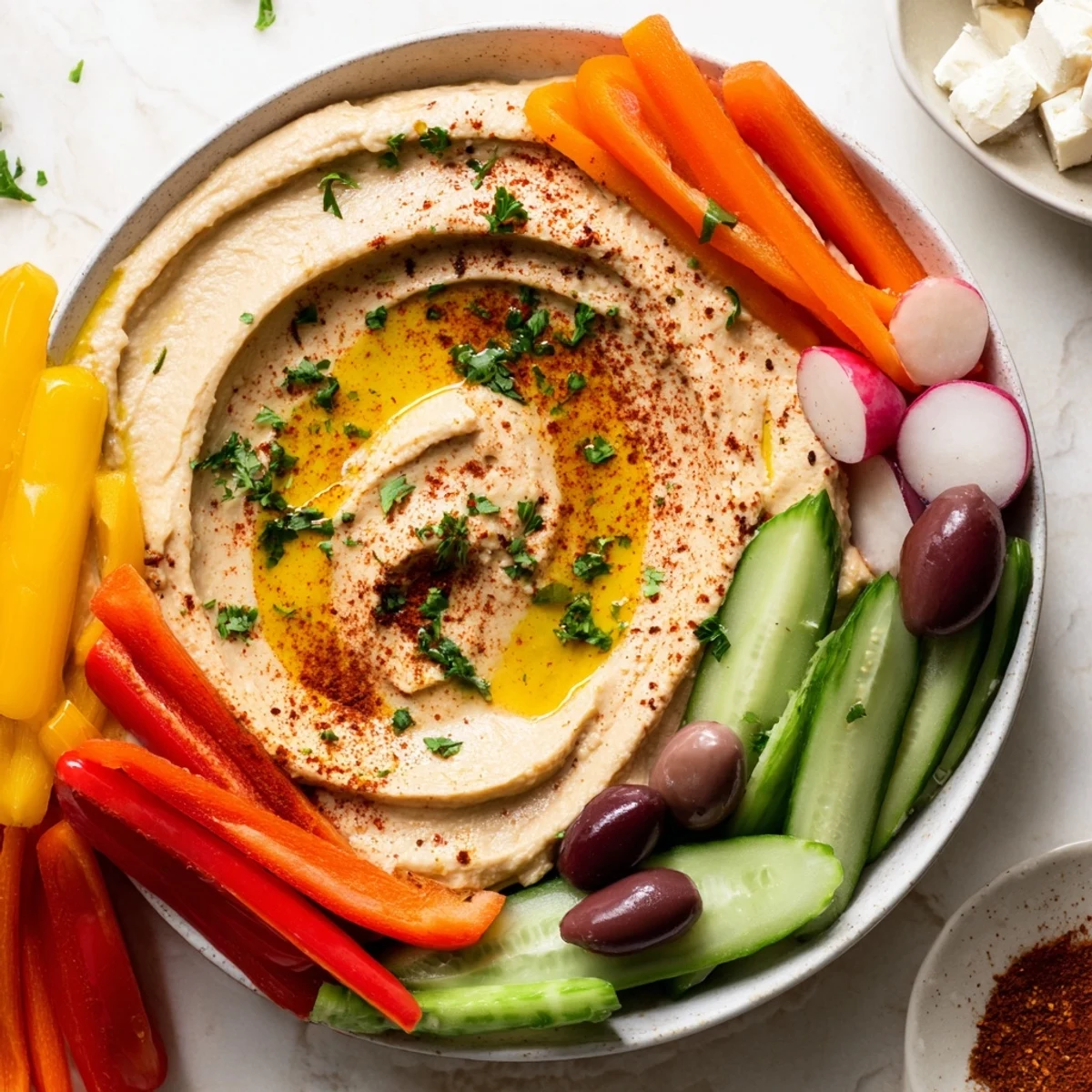
 This Mediterranean hummus platter features a smooth, creamy chickpea blend enhanced with tahini, olive oil, lemon, and spices. Fresh vegetables like cherry tomatoes, cucumbers, bell peppers, carrots, radishes, and snap peas add crisp texture and bright colors. Garnished with olives, parsley, and smoked paprika, the dish offers a refreshing and balanced combination ideal for gatherings. Serve with pita or gluten-free crackers for a delightful, easy-to-prepare spread that highlights wholesome Mediterranean flavors.
There's something almost magical about the moment when a food processor transforms humble chickpeas into silky hummus, and I discovered this while standing in a cramped kitchen in Athens, watching my host whirl together the simplest ingredients with absolute confidence. She didn't measure, didn't fuss, just let the machine do its work while chatting about how hummus appears at every table, every gathering, every casual Tuesday lunch. That platter she assembled—surrounded by vegetables so vibrant they practically glowed—became the template for everything I make now. It taught me that the best appetizers aren't complicated; they're just honest.
I made this for a potluck once where I showed up late and slightly panicked, only to have someone eat directly from the platter before I even set it down on the table. That's when I realized this dish doesn't demand perfection or fancy presentation—it just needs to taste good and look inviting, which it does naturally.
Ingredients
- Chickpeas: Use canned and rinsed if you're short on time; the starch will make them dense, so draining matters.
- Tahini: This sesame paste is the soul of hummus—buy it fresh and stir it well before measuring, as the oil separates.
- Extra-virgin olive oil: The good stuff shines here since it's the final flourish, not hidden in cooking.
- Lemon juice: Freshly squeezed tastes brighter than bottled; squeeze it just before blending if you can.
- Garlic: Mince it small so it distributes evenly and doesn't overpower in one bitter bite.
- Cumin: Ground, not seeds—it brings warmth without any harsh edges.
- Sea salt: Kosher works too, but taste as you go because salt strength varies between brands.
- Cold water: Add it slowly; too much makes hummus loose, too little makes it dense.
- Cherry tomatoes: Halving them keeps them tidy on the platter and prevents rolling chaos.
- Cucumber: Slice into sticks so they're easy to grab; store in ice water if prepping ahead.
- Bell peppers: Use a mix of colors—it's all about visual appeal and variety.
- Carrots: Peel them first; the raw snap is the whole point.
- Radishes: Slice thin so they're crisp and not too peppery; they add a surprising bite.
- Sugar snap peas: Eat them raw straight from the farmer's market—no cooking, no waste.
- Kalamata olives: Pit them yourself or buy pre-pitted; the briny funk is essential to the Mediterranean vibe.
- Feta cheese: Crumble it just before serving so it stays textured and doesn't dry out.
- Fresh parsley: Chop just before plating so it stays vibrant green, not oxidized brown.
- Smoked paprika: The powder adds visual drama and a subtle smoky depth.
Instructions
- Blend the base:
- Dump chickpeas, tahini, olive oil, lemon juice, garlic, cumin, and salt into the food processor. Start blending and listen for that satisfying whirl as everything comes together. Watch the transformation from chunky to creamy—it's weirdly hypnotic.
- Find the texture:
- Add cold water one tablespoon at a time while the machine runs, tasting between additions. You want it cloud-like and spoonable, not stiff and not runny. This is where you adjust seasoning too—a pinch more salt, another squeeze of lemon if it needs brightness.
- Plate with intention:
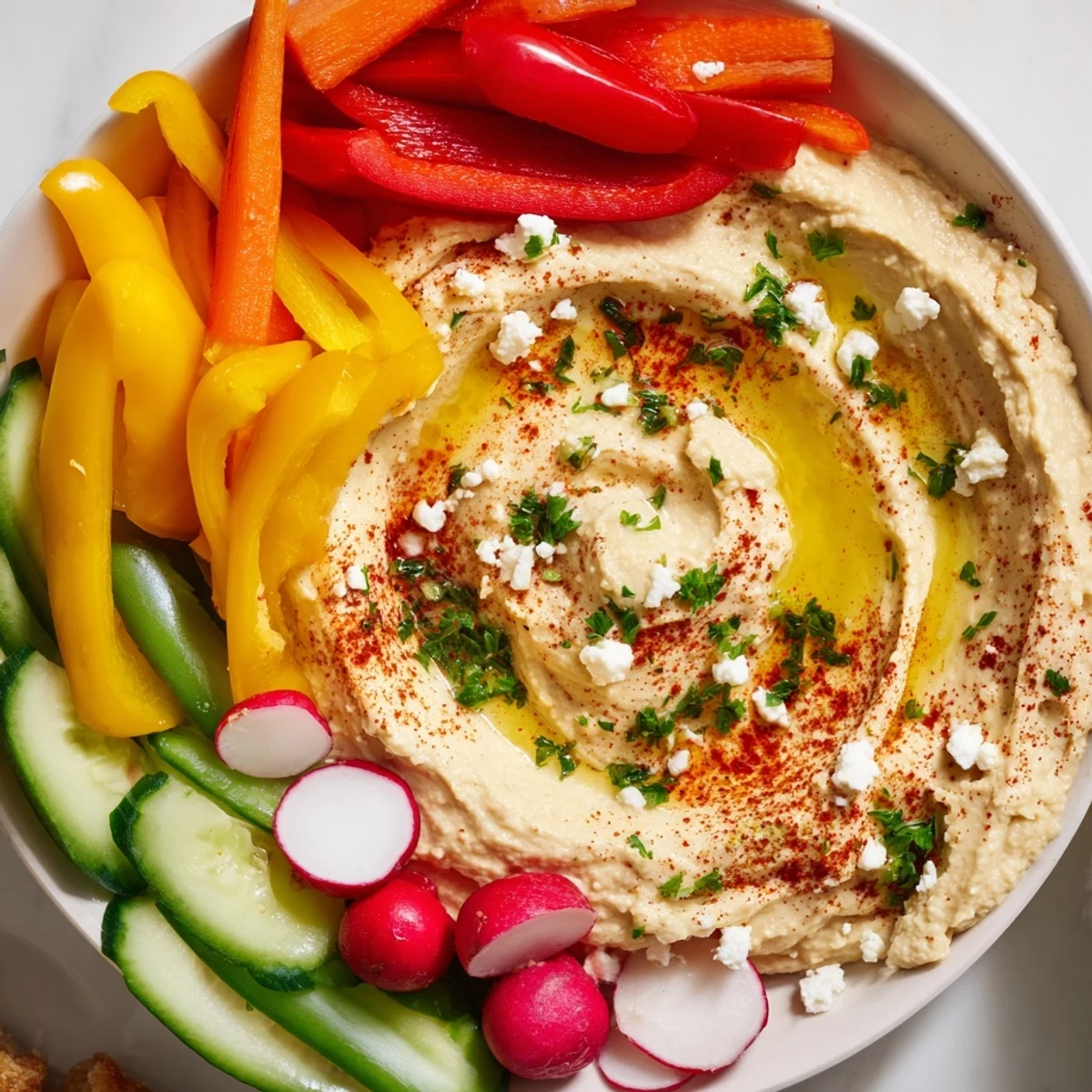
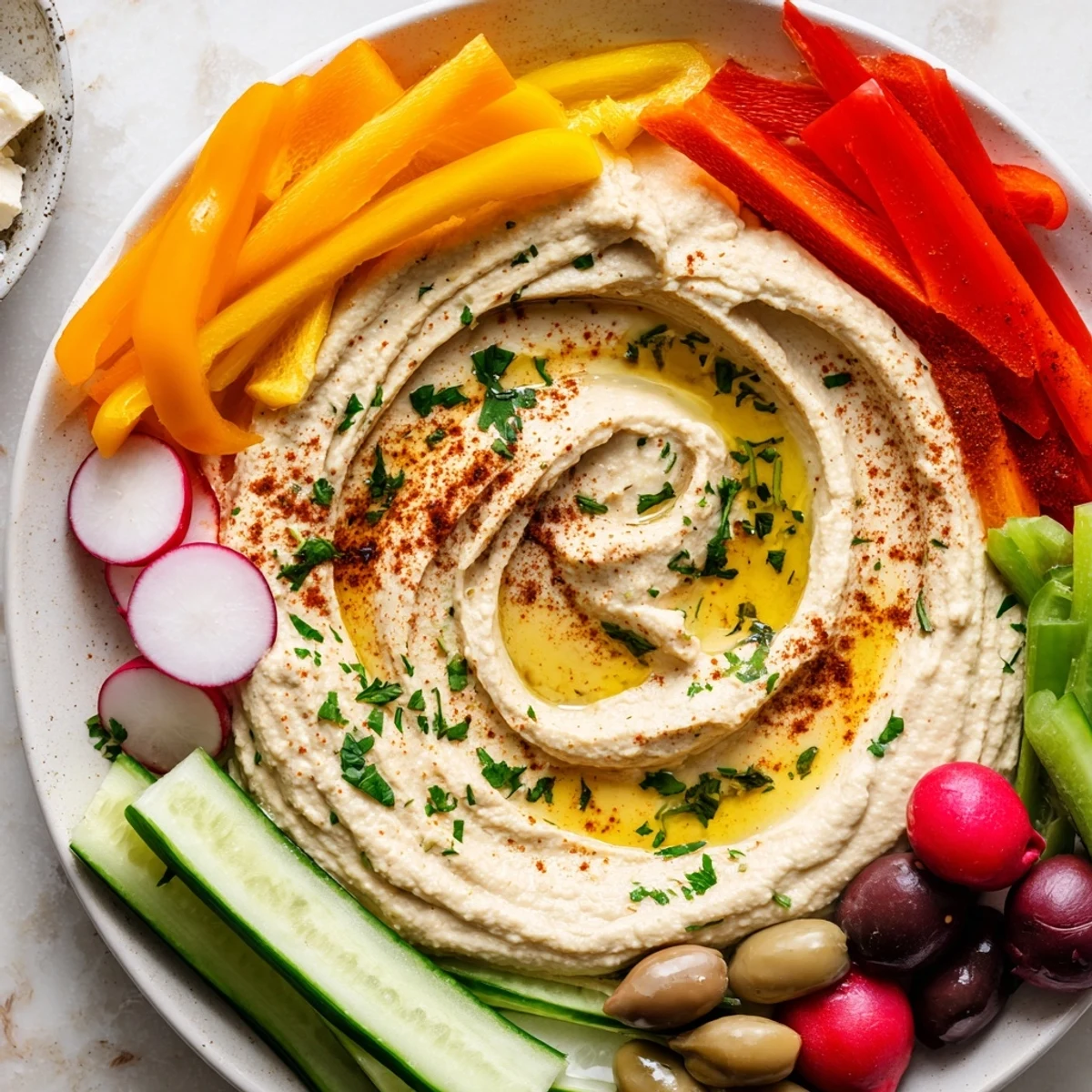
- Scoop the hummus into a shallow bowl and use the back of a spoon to create a gentle swirl on top—not fancy, just intentional. Drizzle olive oil into that swirl like you're painting, then dust with smoked paprika and fresh parsley. The colors matter; they say this is a meal, not an afterthought.
- Build the platter:
- Arrange vegetables around the hummus in clusters by color—tomatoes together, peppers together, carrots in a neat pile. Scatter olives and feta (if using) in the gaps. This takes 5 minutes and looks like it took 30.
- Serve straight away:
- Serve immediately while vegetables are snappy and hummus is at its fluffiest. Set out pita or crackers nearby, or just let people tear off bites of bread and dig in with their hands.
 Pin It
 Years ago, a friend's grandmother served hummus so creamy it was almost cloud-like, and when I asked her secret, she just smiled and said it was patience—letting the food processor do its job without rushing it. That moment shifted how I think about simple food; there's dignity in waiting, and it always pays off.
The Hummus Secret
The difference between good hummus and transcendent hummus is balance and the order you taste. That first bite should be bright from lemon, warm from cumin, deep from tahini, and just salty enough that your palate wakes up. If one flavor dominates, the whole thing feels off-kilter. I learned to taste constantly while blending, stopping every few seconds to check myself.
Vegetable Prep as Meditation
Cutting vegetables for a platter is surprisingly calming once you accept that perfection isn't the goal—consistency and crispness are. I prep vegetables the morning of if I'm ahead, then store them in ice water in the fridge so they stay snappy and vibrant. The cold water also prevents them from browning or wilting, which is clutch when you're cooking for a crowd.
Variations and Swagger
This platter is a template, not a law, which is why it's so liberating to make. Add roasted beets for earthiness, swap in labneh for tanginess, drizzle chili oil for heat, or crown it with toasted pine nuts for crunch. The bones stay the same, but the flavor can shift based on what you have and what you're feeling.
- Toast pine nuts in a dry skillet for 3 minutes if you want to add crunch and richness to the top.
- A thin drizzle of chili oil or pomegranate molasses brings drama and balances the richness of tahini.
- Roasted vegetables like beets or asparagus work beautifully if you want to introduce warmth to an otherwise raw platter.
 Pin It
 This platter is what happens when you stop overthinking and trust that good ingredients, honest preparation, and a little care are enough. It feeds people, it looks beautiful, and it tastes like you know what you're doing—even if you threw it together 15 minutes before everyone arrived.
Recipe FAQs
- → What type of chickpeas can I use?
-
You can use cooked chickpeas or canned ones that are drained and rinsed for convenience without sacrificing flavor or texture.
- → How can I adjust the hummus consistency?
-
Add cold water a tablespoon at a time while blending until you reach a creamy, smooth texture tailored to your preference.
- → What fresh vegetables pair well with this platter?
-
Cherry tomatoes, cucumbers, bell peppers, carrots, radishes, and sugar snap peas provide a crisp and colorful complement to the creamy base.
- → Can I make this platter vegan-friendly?
-
Yes, simply omit the feta cheese or substitute it with a plant-based alternative to keep the dish entirely plant-based and gluten-free.
- → What garnishes enhance the flavors?
-
Smoked paprika, fresh parsley, Kalamata olives, and a drizzle of extra virgin olive oil add depth and authentic Mediterranean notes.
- → What are good serving suggestions for this platter?
-
Serve with warm pita bread or gluten-free crackers to provide a satisfying crunch and complete the fresh, vibrant flavors.